Implied Volatility: Why Options Can Fall After the Event
Last saved:
Executive Summary
- ✦Implied volatility reflects uncertainty embedded in option prices, not direction.
- ✦Event premium can collapse after the catalyst even when the news matters.
- ✦Direction, magnitude, timing and volatility all affect an option trade.
- ✦Compare the required move with premium, costs and maximum loss.
Learning objective: understand what implied volatility represents, why option prices can fall after an expected event and how to separate a correct directional view from a profitable option trade.
An option's price reflects more than whether the underlying asset may rise or fall. It also reflects time to expiry, interest rates, dividends and the market's estimate of future uncertainty. That uncertainty component is expressed as implied volatility (IV).
IV is backed out from option prices. It is not a direct forecast of direction and it does not guarantee how far the asset will move.
1. Separate implied and realised volatility
Implied volatility comes from current option prices and represents the volatility consistent with those prices under a model. Realised volatility measures how much the underlying actually moved over a historical period.
Option buyers generally need the realised move, timing and direction to be sufficient relative to the premium paid. Option sellers may benefit when realised movement is smaller than what the premium implied, but their losses can be large and sometimes theoretically unlimited.
2. Understand event premium
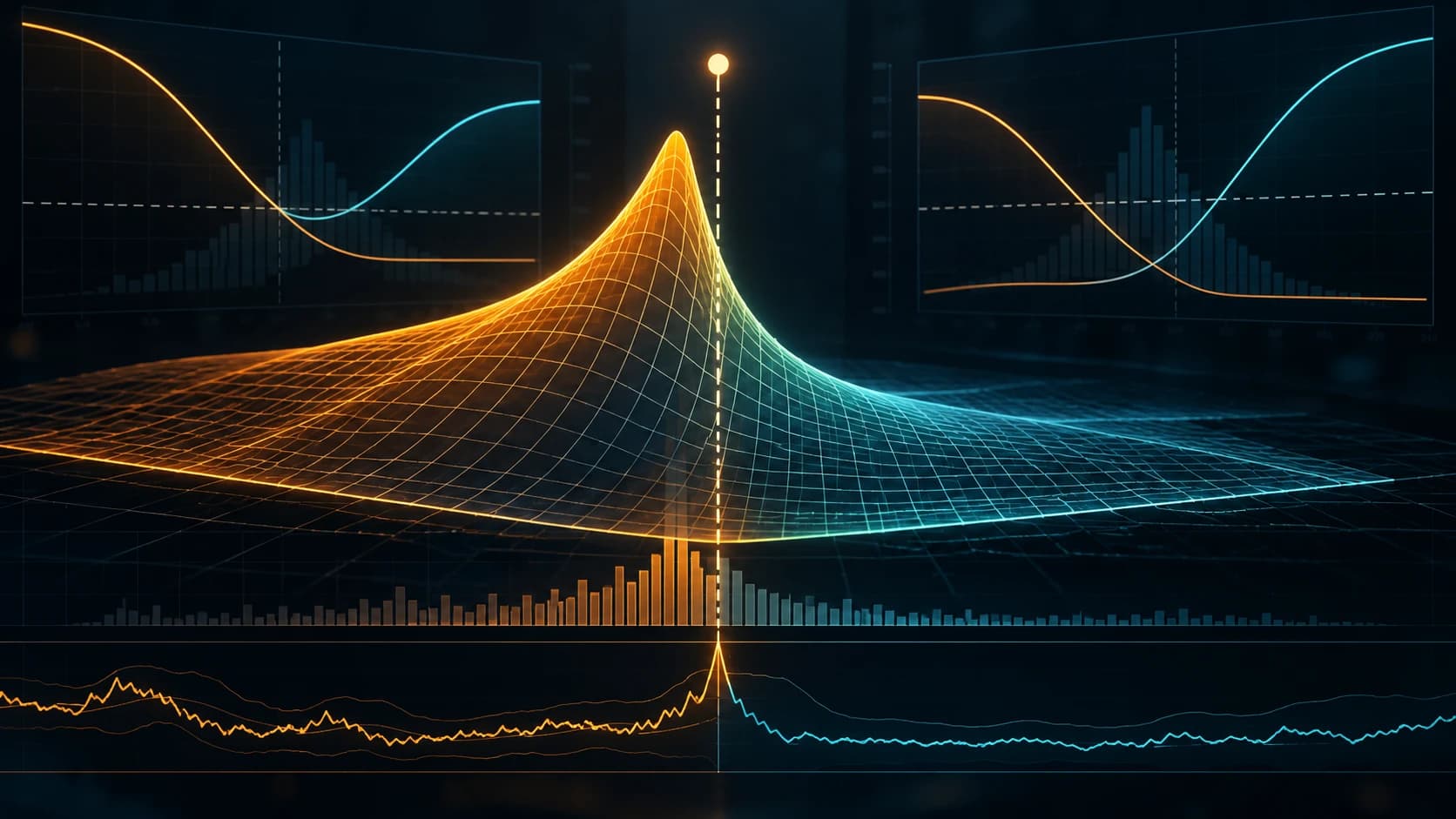
Before earnings, central-bank decisions or major economic releases, uncertainty is concentrated around a known date. Demand for protection and speculation can lift IV and option premiums. After the event, uncertainty disappears even if the news is important. IV may fall sharply: an IV crush.
The underlying can move in the expected direction while the option still loses value if the move is smaller than the premium anticipated or occurs too slowly.
3. Read the expected move carefully
Traders often use the price of an at-the-money straddle as a rough market-implied move for the expiry. If a stock is £100 and the call plus put costs £8, the market is pricing substantial movement around the event.
This £8 is not a guaranteed range or a probability boundary. Transaction costs, skew, interest and the exact expiry matter. Use the full option chain and a pricing model rather than treating the shortcut as precise.
4. Know the other sensitivities
Option value also changes with:
- Delta: sensitivity to the underlying price
- Theta: time decay
- Vega: sensitivity to implied volatility
- Gamma: how delta changes as price moves
Near an event, a long option may gain from delta but lose from vega and theta. Position analysis should consider all of them and the maximum possible loss.
Worked example
A share trades at £100 before earnings. A one-week £100 call costs £5, with IV elevated. The trader expects bullish news. After earnings, the share rises 3% to £103, but IV falls sharply.
At expiry, the call's intrinsic value would be only £3 if the share stayed at £103. A buyer who paid £5 would still face a £2 loss before costs. The direction was correct, but the move did not exceed the premium hurdle.
If the share had risen to £108, the call would have £8 intrinsic value at expiry, producing £3 gross profit. The exact path before expiry depends on remaining time and volatility.
The figures are hypothetical and omit taxes and detailed pricing effects.
Common mistakes
- Treating high IV as a prediction of a price fall.
- Buying options before an event without comparing premium with the required move.
- Ignoring IV crush after the catalyst.
- Focusing only on delta and forgetting theta or vega.
- Selling uncovered options because a premium looks expensive.
- Using illiquid contracts with wide spreads.
Practical checklist
- What event and expiry drive the option premium?
- How does current IV compare with its own history and other expiries?
- What move is roughly embedded in the straddle price?
- How much move is needed to cover premium and costs?
- What are delta, theta, vega and gamma exposures?
- Is the option chain liquid with tradable spreads?
- What is the maximum loss under gap scenarios?
- What happens if direction is right but magnitude is too small?
The Money Man view
An option trade is a view on direction, magnitude, timing and volatility together. Around events, the hurdle is often higher than a simple bullish or bearish forecast suggests. We compare the expected move with the premium, define maximum loss first and avoid uncovered risk that cannot be contained.
Educational information only. This tutorial is AI-assisted and published by The Money Man. It is not personalised investment advice or an options recommendation. Options are complex, can expire worthless and may create losses exceeding the initial premium for some strategies.