Opening Range Breakout: Build Rules Before the First Trade
Last saved:
Executive Summary
- ✦Fix the market session and opening-range length before the interval begins.
- ✦A tick outside the range is not enough; define close, distance, volume or retest confirmation objectively.
- ✦Set structural invalidation before sizing and include spread, slippage, fees and gap stress.
- ✦Backtests must wait for completed data and use the next tradable fill rather than an ideal chart price.
Opening Range Breakout: Build Rules Before the First Trade
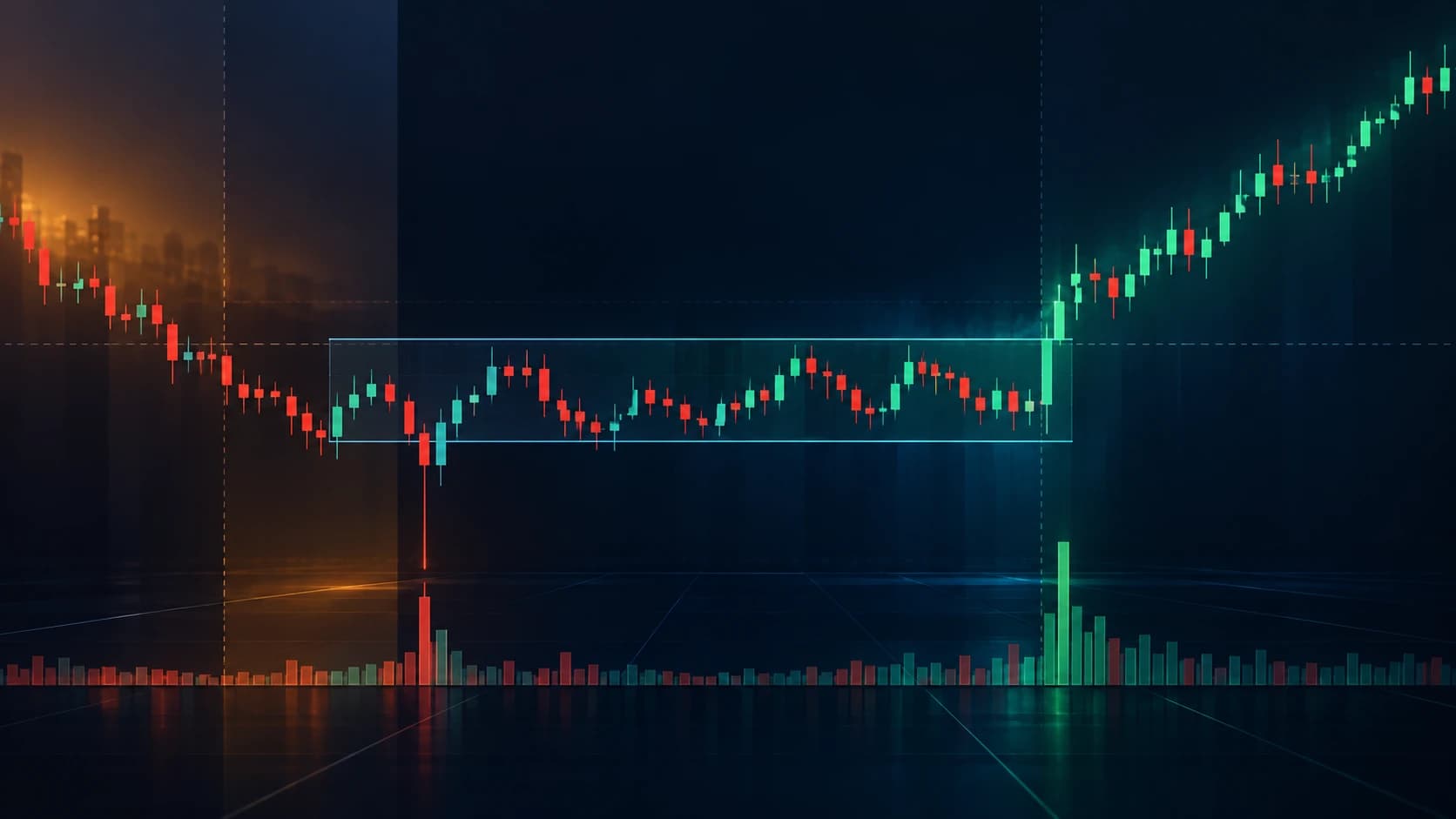
The Opening Range Breakout, or ORB, uses the high and low formed during a defined period after a market opens. Traders then test whether price can leave that range with enough acceptance to justify a directional trade. The idea is simple; the difficult part is defining the session, confirmation, stop, size and exit without changing the rules after seeing the chart.
বাংলায় পড়ুন: Opening Range Breakout: First Trade-এর আগেই Rule তৈরি করুন
Learning objective: By the end of this tutorial, you should be able to define an opening range without look-ahead bias, write objective breakout and invalidation rules, size a hypothetical trade from its stop, filter common false breaks and design a test that includes realistic fills and costs.
1. Define the market session first
An opening range needs one official reference session. Examples include the cash-market open for a share index or the primary exchange session for an individual stock. Futures and crypto may trade for nearly 24 hours, so the chosen open can be arbitrary unless it corresponds to a meaningful liquidity event.
Document:
- exchange and instrument;
- time zone;
- regular or extended hours;
- opening auction treatment;
- session start and end;
- daylight-saving adjustments;
- holiday and shortened-session rules.
Using one venue's open for entry and another data vendor's session for testing can shift the range and invalidate the comparison.
2. Choose the range length before the day begins
Common research windows include the first 5, 15 or 30 minutes. No interval is universally best.
- A short range reacts quickly but contains more noise and execution pressure.
- A longer range contains more information but may create a wider stop and a later entry.
For a 15-minute ORB, wait until the first 15-minute interval is complete. The highest traded price becomes the opening-range high and the lowest becomes the opening-range low. Those levels must remain fixed for that day's rule.
Do not expand the range later because the breakout failed. That changes the strategy after observing the outcome.
3. Define what counts as a breakout
A single tick through the range can be a stop run rather than acceptance. Possible confirmation rules include:
- a bar close outside the range;
- a minimum distance beyond the boundary;
- above-normal volume relative to the same time of day;
- a retest that holds the broken level;
- alignment with a higher-timeframe trend;
- price remaining on the same side of session VWAP.
Every additional filter reduces the number of trades and can overfit the past. Test each filter separately and define it numerically. “Strong volume” or “clean close” cannot be reproduced unless the rule states exactly how they are measured.
The breakout and false-breakout guide explains confirmation more broadly; ORB applies those ideas to one fixed session range.
4. Long and short templates
A basic research template might be:
Long setup
- Record the completed opening-range high and low.
- Wait for a chosen bar to close above the high.
- Enter at the next tradable price or after a defined retest.
- Place the invalidation at a pre-defined structural level.
- Exit by target, trailing rule, time stop or session close.
Short setup
- Record the same completed range.
- Wait for a chosen bar to close below the low.
- Enter at the next tradable price or after a defined retest.
- Place the invalidation at a pre-defined structural level.
- Apply the same style of exit rule.
These are testing templates, not trade recommendations. A strategy can allow both directions, one direction based on a higher-timeframe filter, or no trade when the range is unsuitable.
5. Worked position-sizing example
Assume a hypothetical share forms this 15-minute opening range:
- range low: £100.00;
- range high: £102.00;
- confirmed long entry after a close and retest: £102.30;
- structural stop: £101.00;
- account equity: £25,000;
- illustrative risk budget: 0.50% of equity, or £125;
- estimated spread, slippage and fees: £10.
Price risk per share is:
£102.30 − £101.00 = £1.30.
Capital available for price risk after estimated costs is:
£125 − £10 = £115.
Maximum whole-share quantity under this example is:
Floor of £115 ÷ £1.30 = 88 shares.
Planned price risk is £114.40, and planned risk including the £10 cost estimate is £124.40.
If the test uses a two-R target, the illustrative price is:
£102.30 + (2 × £1.30) = £104.90.
The 0.50% budget and two-R target are examples, not universal settings. A stop order does not guarantee a £101.00 fill during a gap, halt or fast market. Review the position-sizing guide and market-structure stop guide for the underlying calculations.
6. Opening-range width is a risk filter
The distance between the range high and low affects both opportunity and execution.
Very narrow range
A small range can offer attractive reward relative to stop distance, but minor noise may trigger repeated false breaks. Tick size and spread can consume a large part of the theoretical risk.
Very wide range
A large opening move may already have consumed much of the day's range. A stop beyond the opposite side can be too far away, while a tight stop inside the range can be hit by normal volatility.
Possible research filters compare range width with price, recent Average True Range or the historical opening-range distribution for that instrument. Avoid using one fixed currency amount across assets with different price and volatility scales.
7. Gap context changes the setup
An instrument can open above or below the previous session's range because of earnings, economic data or overnight news.
Ask:
- Is the opening range entirely outside the previous day's value area?
- Is price breaking in the direction of the gap or attempting to fill it?
- Is the prior close or previous high/low nearby?
- Has overnight volume already been unusually large?
- Is a scheduled announcement due just after the opening range?
A gap is context, not automatic confirmation. Large overnight moves can continue, reverse sharply or become illiquid.
8. Use volume and VWAP carefully
Volume can help distinguish participation from a thin probe, but raw opening volume is normally higher than midday volume. Compare it with the same time-of-day history rather than a simple full-day average.
Session VWAP can act as an execution reference or regime filter. For example, a long-breakout test may require price to remain above VWAP. This does not make the signal predictive by itself. VWAP is volume-weighted information from the current session and changes as new trades occur. The VWAP guide explains why execution benchmarks and signals should remain separate.
9. Recognise common false-break patterns
Warning signs can include:
- price trades beyond the boundary but closes back inside;
- the breakout bar has a long rejection wick;
- volume is weak relative to the same session time;
- a breakout runs directly into a previous daily level;
- the spread widens as price crosses the range;
- correlated indices or sector peers do not confirm;
- the market reverses through the entire opening range.
No sign guarantees failure. Define how a failed breakout is handled: immediate stop, close back inside the range, opposite-side break, or a time-based exit. Reversing direction automatically after every failure can create rapid whipsaw losses.
10. Time exits matter
An ORB is based on information released near the open. If price cannot follow through, the original premise may decay.
Possible exit rules include:
- close after a fixed number of bars without progress;
- exit at a defined market time;
- reduce before scheduled news;
- trail behind new swing points;
- close every position before the session ends.
Holding overnight changes the strategy. It introduces gap, financing and event risk that an intraday backtest may not contain.
11. Backtest without look-ahead bias
A credible ORB test must simulate when information became available.
- Build the range only from completed observations.
- Trigger only after the stated confirmation is known.
- Use the next available bid, ask or bar-based fill rule.
- Model spread and slippage by liquidity and volatility.
- Include halts, missing bars and unfilled limit orders.
- Use point-in-time symbol membership to reduce survivorship bias.
- Separate parameter selection from out-of-sample validation.
- Report skipped trades and data errors.
Entering at the exact range high on the same bar that later closes above it is often impossible without an intrabar rule. A backtest that assumes that fill can overstate performance.
12. Common mistakes
Drawing the range after the breakout
The interval must be fixed before its outcome is known.
Entering on every one-tick breach
Small probes are common around visible highs and lows. Define confirmation and realistic execution.
Ignoring the spread at the open
Opening liquidity can be fragmented and expensive. A chart's last price is not always a tradable fill.
Using one stop size for every day
Range width and volatility change. The position size should respond to the actual invalidation distance.
Chasing after a large breakout bar
Entry far beyond the range can worsen reward-to-risk and increase reversal exposure.
Adding filters until the backtest looks perfect
Too many conditions can fit noise. Validate each rule on unseen data and different regimes.
Ignoring no-trade days
An excessively wide, illiquid or news-distorted range may not support the tested setup.
13. Practical checklist
- Specify instrument, exchange, session and time zone.
- Fix the opening-range length before trading.
- Record the range only after the interval completes.
- Define the breakout close, distance, volume or retest rule.
- Mark higher-timeframe levels and scheduled events.
- Set invalidation before calculating quantity.
- Include spread, slippage, fees and gap stress.
- State target, trailing, time and session-close exits.
- Limit repeated attempts after failed breaks.
- Backtest next-tradable fills rather than ideal chart prices.
- Validate across instruments, regimes and out-of-sample periods.
- Keep screenshots and rule-compliance notes in the journal.
The core lesson
The Opening Range Breakout is not just a rectangle and an entry arrow. It is a complete decision process built around one fixed session interval.
The range, confirmation, invalidation, size, cost model and exit must all be defined before the outcome is known. That discipline turns a visual pattern into a strategy that can be tested honestly.
Educational risk disclosure
This tutorial was prepared with AI-assisted research and writing under The Money Man editorial workflow. All prices, account values and risk parameters are hypothetical and used only to explain the method. This is educational information, not personalised investment advice or a promise of performance. Opening liquidity can be volatile, stops can slip, and intraday leverage can produce losses beyond the planned amount.