US Midterm Sweep: What Divided Government Changes for Markets
Last saved:
At a glance
- AP reports Democrats well past 218 House seats and holding at least 54 of 100 Senate seats; formal processes continue.
- The new Congress normally convenes on 3 January, so the outgoing Congress retains authority during the transition.
- Fiscal, Iran-war, tariff and AI-policy effects require legislation, executive action or verified implementation—not election headlines alone.
- Watch funding negotiations, official diplomatic steps and published policy text; an initial market rally does not confirm lasting stability.
Prices and market observations refer to the times stated in the article, not live quotes. Check the sources and observation times alongside the figures. Article and save dates are not quote timestamps.
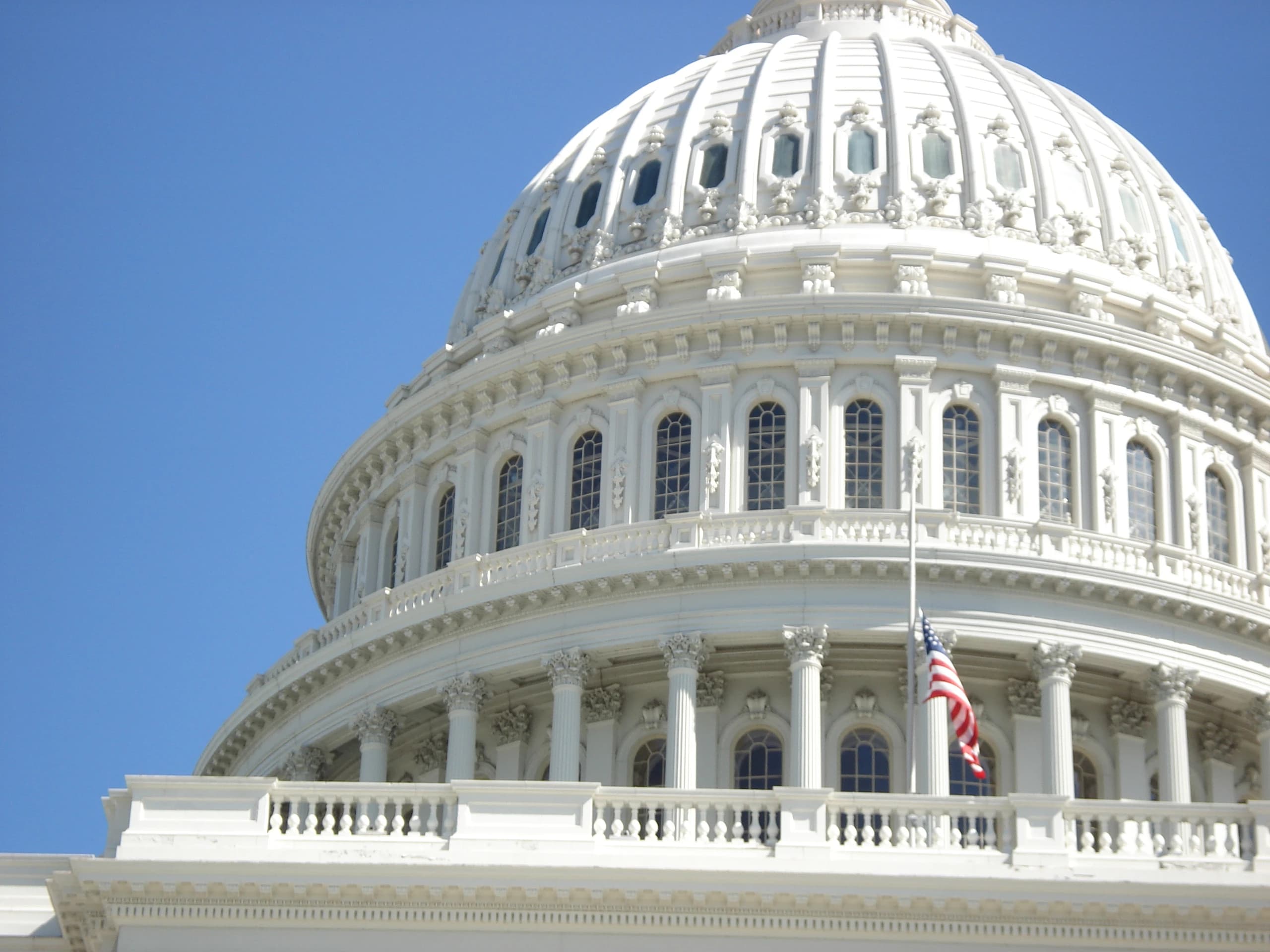
Cover: the U.S. Capitol on 8 October 2006, photographed by Sox524, via Wikimedia Commons, released into the public domain. This archive photograph is illustrative; it is not an election-night image.

A decisive result, but not an instant policy switch
The projected Democratic sweep of both chambers of the US Congress is a material geopolitical and economic event. It changes the balance of power from January, yet it does not immediately end the Iran war, cancel tariffs or enact new fiscal policy. Traders need to separate the election result, the transition timetable and the policies that are eventually implemented.
Associated Press reported on 4 November that Democrats were well past the 218 seats needed for a House majority and held at least 54 of 100 Senate seats. Those are reported election results while counting and formal certification processes continue; this article does not independently certify any race.
The US Senate's official guide says the new Congress normally convenes at noon on 3 January in an odd-numbered year. Until then, the outgoing Congress retains its authority. The change therefore creates a transition period rather than an overnight transfer of legislative control.
The first market reaction is evidence, not a forecast
At 10:00 EST / 15:00 UTC / 21:00 Bangladesh time on 4 November, AP's market report recorded the S&P 500 up 1.8%, the Dow up 1,112 points or 2.1%, and the Nasdaq Composite up 2.4%. The US 10-year Treasury yield was 4.92%, down from 4.95% late Tuesday, while Brent was $100.63 per barrel, down 2.9%.
These are timestamped news observations, not live quotes or closing prices. AP linked the broad rally partly to expectations that divided government may reduce the risk of large policy changes, while also cautioning that profits and interest rates generally matter more to stocks over time. Oil's decline occurred amid continued uncertainty over the Iran war. A one-session move does not prove that any peace agreement, tariff change or fiscal package will follow.
Four transmission channels for traders and investors
1. Fiscal policy and the funding deadline
A Democratic Congress can shape spending bills, taxes and oversight, but a law still needs the full legislative process and usually presidential approval. AP reports that a government funding dispute could lead to a shutdown next month. The relevant market checkpoints are an actual funding agreement, bill text and votes—not campaign promises.
For bonds and rate-sensitive shares, a credible limit on future deficits could support lower yields; a shutdown confrontation or spending standoff could instead raise uncertainty. Neither outcome is established by the election result alone.
2. Iran, energy and defence
Reuters' international analysis says it remains unclear how the result will change the Iran conflict. Congress can apply scrutiny, shape appropriations and propose legislation, while the president retains substantial authority over defence and foreign policy. Expectations of de-escalation can remove some oil risk premium before physical supply changes, but that expectation can reverse if talks fail or attacks intensify.
For oil, airlines and energy-intensive companies, verified shipping access, military activity and official negotiations matter more than partisan labels. For defence companies, budget language and procurement decisions matter more than assumptions about a peace dividend.
3. Tariffs and global trade
Reuters reported that much of the administration's tariff programme uses executive authorities that remain in place. Congress may try to constrain or reverse measures, but legislation could face political hurdles and a presidential veto. Companies therefore should not treat the vote as immediate relief from import costs.
The evidence to watch is a published executive action, enacted legislation, court decision or negotiated trade agreement. Headlines about future pressure are weaker evidence than a change in the applicable tariff schedule.
4. AI and technology oversight
AP reported mixed reactions within technology: the Nasdaq was higher at the stated snapshot, while some AI-linked companies were under pressure amid expectations of more scrutiny. A new Congress can investigate and propose regulation, but no new AI rule follows automatically from the election.
For semiconductor, data-centre and utility investors, separate political risk from company revenue, capital spending, financing needs and execution. Our AMD earnings analysis shows why a strong company report and a policy-sensitive market reaction can coexist.
The Money Man View: next several days to three months
Base case — relief first, policy detail later. Markets may continue to price a lower probability of one-party legislative change, but the outgoing Congress remains in place until January and executive authorities continue. Expect sector rotation and headline volatility before the durable policy effects are known.
Constructive scenario. A credible funding agreement, verified progress towards de-escalation with Iran and clearer limits on disruptive tariff changes would strengthen the lower-volatility interpretation. Confirmation requires official text, votes, operational evidence or verified diplomatic steps. Failure to deliver those checkpoints would invalidate this scenario even if equities initially rally.
Adverse scenario. A funding breakdown, renewed military escalation, retaliatory tariff action or an aggressive veto confrontation would weaken the gridlock-as-stability thesis. This scenario is weakened by enacted funding, sustained diplomatic progress and stable implementation of trade rules. An intraday equity decline alone is not confirmation.
Alternative scenario — divided government without macro relief. Congress may increase oversight without changing the executive actions that matter most to trade and foreign policy. In that case, company earnings, inflation, yields and the physical energy balance can remain the dominant drivers. The election result would still matter institutionally while offering less immediate economic relief than markets first assumed.
Next verified checkpoints
Watch remaining certified race results, leadership selections, the outgoing Congress's funding negotiations, official Iran-war and diplomatic statements, and published tariff or AI-policy proposals. Use completed market closes rather than assuming the 10:00 EST snapshot will persist.
This is an event map, not a call to buy a broad index, oil, defence, renewable-energy or technology shares. Position size and invalidation need to reflect the asset being traded; political headlines can gap prices beyond intended exits.
The Money Man uses AI-assisted research and writing. This is general analysis and education, not personalised investment advice. Election projections, policy negotiations and geopolitical scenarios can change. No personal trade, political endorsement or guaranteed market outcome is claimed. The cover is a public-domain archive photograph used for illustration.