Risk management
Plan position size, invalidation and possible loss before each trade.
The Money Man / Education
Step-by-step lessons on risk, charts, strategy and trading psychology. A new practical tutorial is added every day, with a complete Bangla edition.
Learning paths
Plan position size, invalidation and possible loss before each trade.
Read trends, support, resistance, breakouts and daily closes.
Build disciplined habits with journals, backtesting and clear rules.
Tutorial library
Search the full education archive by topic. Every lesson is educational information, not personalised financial advice.

Learn how time-weighted and money-weighted returns treat deposits, withdrawals and cash-flow timing—and which measure fits each performance question.

Learn why equal gains and losses do not cancel, how geometric return differs from the arithmetic average and why leverage magnifies compounding risk.

Learn how Value at Risk sets a loss threshold, how Expected Shortfall measures the average tail loss and why both still need stress testing.

Learn how to calculate portfolio concentration with HHI and the effective number of holdings, then add correlation, factor and liquidity checks.
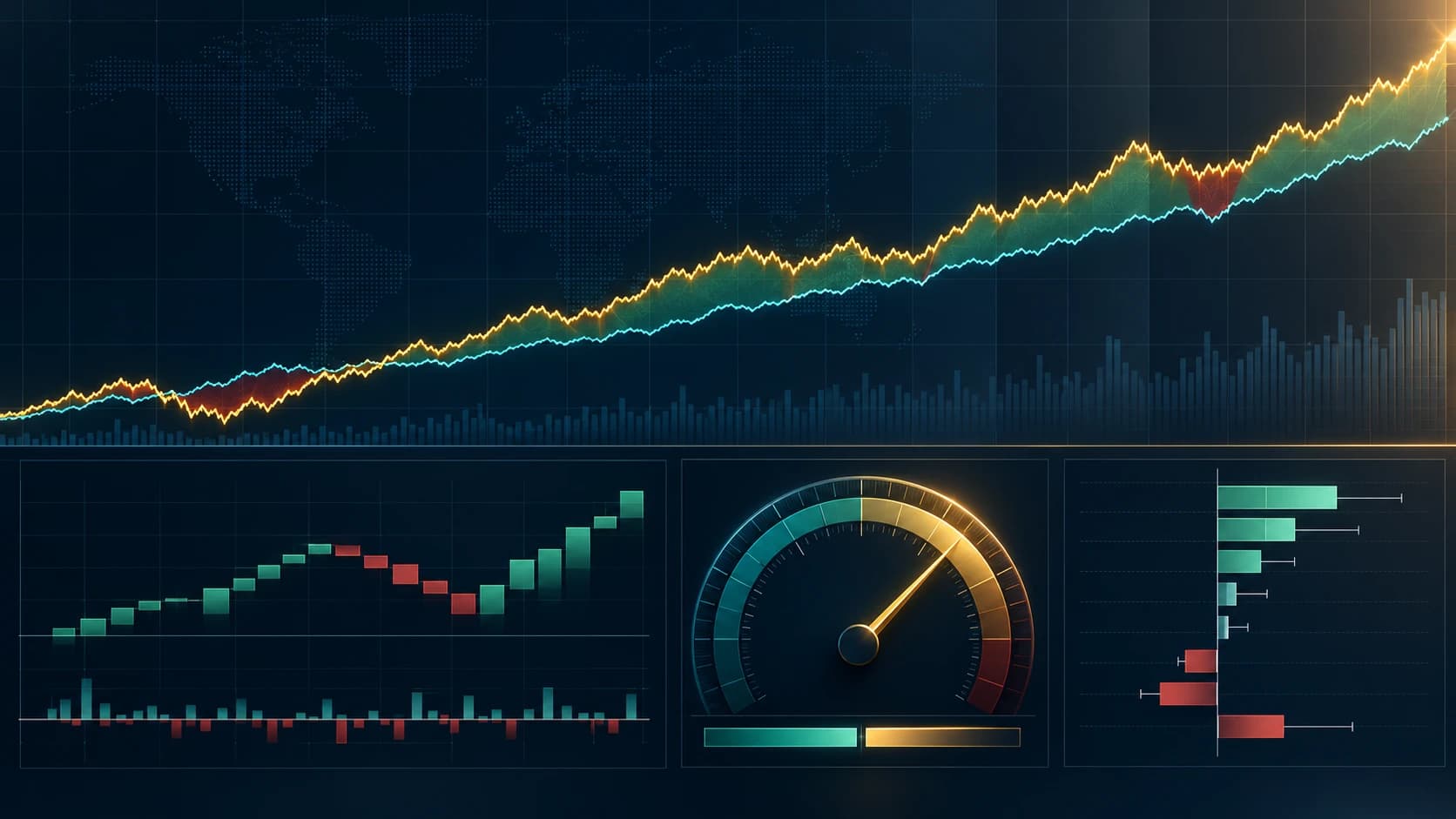
Learn how to calculate active return, tracking error and the information ratio, then assess benchmark choice, fees and sample uncertainty.

Learn how volatility targeting adjusts exposure as markets change, with a worked sizing example, leverage caps, rebalancing rules and key limitations.

Learn why futures differ from spot, how to calculate and annualise basis, and how financing, dividends, storage and convergence affect the spread.

Learn how to calculate the Calmar ratio, compare annualised return with maximum drawdown and recognise what this compact risk metric leaves out.

Learn how to monitor live strategy performance, separate normal drawdown from execution or regime change, and define evidence-based pause and review rules.

Learn how to attribute trading P&L to signal, position sizing, execution, exit decisions and explicit costs without confusing luck with skill.

Learn how implementation shortfall measures delay, fill-price, fee and missed-trade costs from the decision price to the real portfolio.

Learn how to use base rates, likelihoods and Bayesian updating to judge trading signals without confusing confidence with probability.