
Stocks
5 min read
Nasdaq Holds Monday’s Breakout as Tuesday’s Early Extension Fades
Nasdaq stays above Friday’s former range, but gives back its early push beyond Monday’s high. A daily trading plan ahead of the Fed and Microsoft earnings.
Dhaka Stock Exchange index data and market commentary. Check the update time before using these figures.
Last Updated: 27/10/2026Open
Current Index
0.00
Point Change
0.00
Percent Change
Nasdaq stays above Friday’s former range, but gives back its early push beyond Monday’s high. A daily trading plan ahead of the Fed and Microsoft earnings.

Nasdaq rebounds inside Friday’s range ahead of Microsoft earnings and the Fed. Follow verified daily levels, breakout conditions and the risks to each scenario.

Bitcoin recovered above $80,000 while Friday oil, yields and weak equity breadth set up a high-risk week of Fed, ECB and Bank of Japan decisions.

Distinguish new-share issuance from shareholder sales, calculate dilution and interpret follow-on, shelf and at-the-market equity programmes.

Learn how index additions and deletions create passive flows, estimate their possible size and avoid chasing a crowded rebalance trade.

Learn how fully paid stock lending earns variable income and assess collateral, counterparty, recall, voting and tax risks.

Understand dividend entitlement dates, the ex-dividend price adjustment and why cash income alone is not investment profit.

Friday oil surged while the Dow fell 1.2%. Our weekend risk map covers stocks, gold, Bitcoin, Fed week and the levels traders should watch.

Learn how revised economic data, restated financials and current index members can leak future information into a backtest.

Compare trading returns using deployed capital, holding time, risk and margin without being misled by leverage or annualisation.

Learn how to size trading-account cash from obligations, stressed losses and margin needs while measuring opportunity cost.

Calculate how commission, spread and slippage raise the win rate a trading strategy needs to break even.

Learn how price-time priority, volume ahead, partial fills and adverse selection determine whether a passive limit order executes.

Learn how share-price returns and exchange-rate moves combine to determine a UK investor’s result in pounds.

Learn how borrow fees, dividend obligations, recalls and forced buy-ins change the real cost and risk of a short position.

Learn why stops may fail across earnings gaps, how to build event scenarios and how to size a position for adverse overnight movement.

Dow closed 653 points lower and S&P 500 lost 0.52% as WTI reached $103.72, while semiconductor shares retained a smaller positive cushion.

Nasdaq turned negative, S&P 500 tested 7,630 and WTI reached $103.38 as the narrow technology cushion weakened into the final trading hours.

Nasdaq faded back towards flat and the S&P 500 loss deepened as technology gains narrowed, while WTI held above $102 and the 10-year yield stayed near 5%.

Nasdaq turned positive and VIX fell below 20 as chip stocks extended their rebound, but Dow and equal-weight shares remained under pressure.

Dow fell 1% and WTI broke $102.50 after the US open, while chip shares rebounded and exposed a sharp split beneath the headline indices.

VIX crossed 20, WTI held above $101 and US futures weakened before the open, while Asia recovered and Europe remained lower.

Learn how share buybacks change EPS and ownership, then test net dilution, funding, valuation and the price paid before calling them positive.

Learn how stock splits, reverse splits and dividends alter charts, and how to choose raw, adjusted or total-return data without false signals.

European shares weakened through Friday morning as DAX fell 0.9%, WTI reclaimed $101 and VIX rose towards 20 ahead of the US open.

KOSPI reversed an early 4.1% fall to close 0.3% higher as SK hynix jumped 4.4%; Nikkei recovered sharply but finished 0.3% lower.

KOSPI reduced an early 4.1% fall to 0.8% as SK hynix gained 2.5%; Brent reached $114 while gold retested support above $4,000.

Gold rebounded from $4,001, WTI slipped below $100 after reaching $100.97 and the KOSPI faded from its rebound high as Bitcoin gained.

KOSPI recovered from a 4.1% early drop to a 1.3% loss as SK hynix turned positive, while WTI retook $100 and gold tested $4,018.

KOSPI fell 2.9% and Nikkei slipped 0.9% as Japan's September headline and core CPI reached 2.1%, while Asian chip shares stayed weak.

Learn how to define opening and full price gaps, test gap-fill probabilities and manage execution risk without assuming every gap must close.

Learn why averaging down can lower the displayed entry while multiplying total loss risk, and how a planned scale-in differs.

Learn how to add to a winning trade while recalculating combined stop risk, give-back exposure and position size after every new layer.

Learn how staged exits reshape a trade’s risk and expectancy, calculate weighted R results, and test scaling out after execution costs.

Nasdaq closed 2.6% lower while the Dow finished flat and equal-weight US shares rose; gold fell to $4,037 as Brent held above $113.

VIX approached 20 as Nasdaq futures broke 29,100, gold slipped below $4,050 and technology losses deepened into the closing hour.

Brent broke $113 and WTI reclaimed $100 as oil’s upside move accelerated while the Nasdaq slipped below 26,000.

Nasdaq broke 26,100, gold tested $4,050 and Bitcoin traded below $81,000 as cross-asset pressure deepened while equal-weight US shares stayed positive.
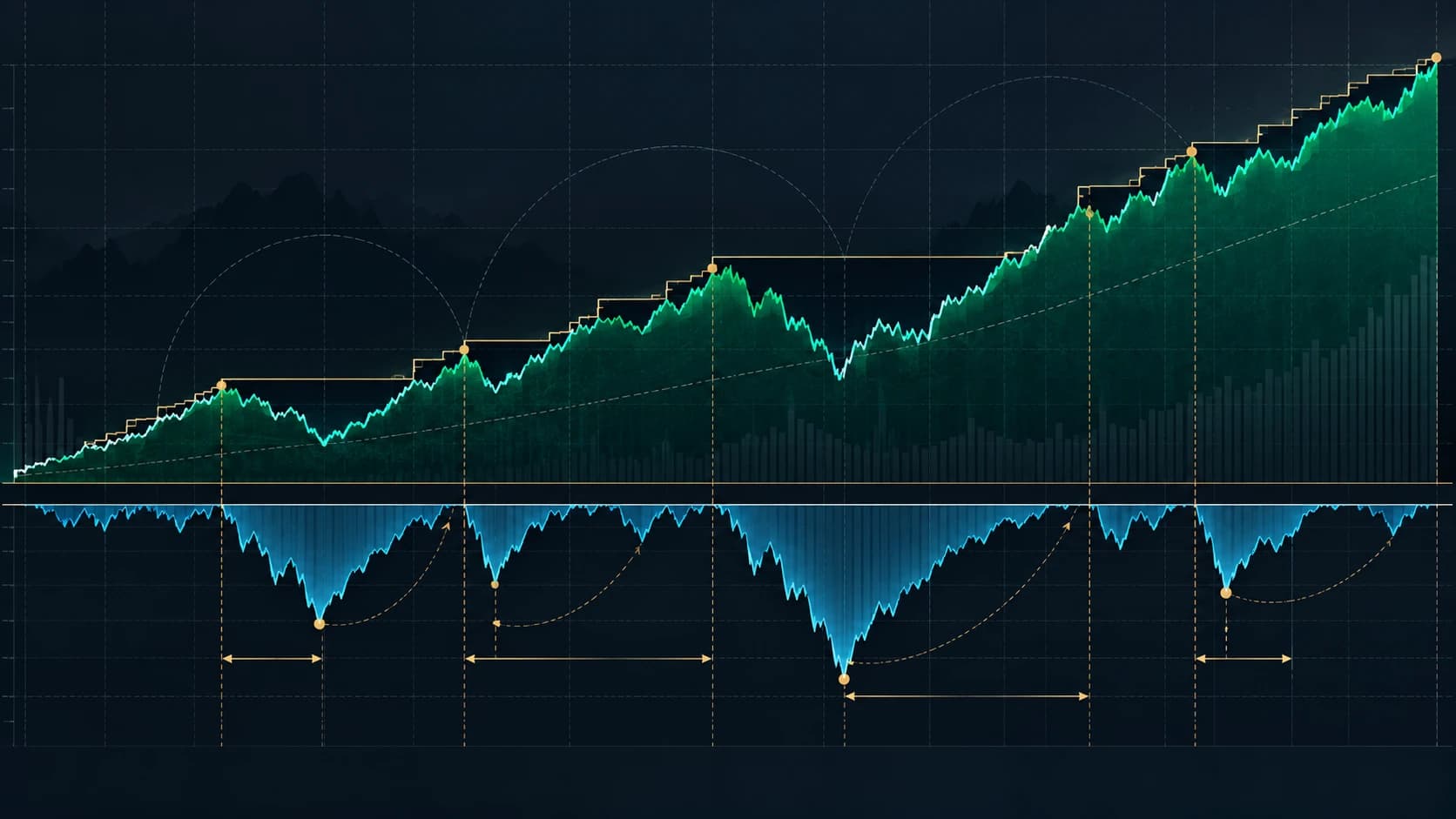
Learn how to build an equity curve, calculate an underwater drawdown chart and assess performance through depth, duration and recovery.

The Nasdaq fell 2.2% as chip and AI shares led a concentrated US sell-off, while VIX reached 19 and gold tested the $4,060 area.

Learn how Day, GTC, IOC, FOK and AON instructions change an order’s duration, partial-fill behaviour and execution outcome.

Asia closed sharply lower, Europe rebounded, US futures remained negative, Brent held near $112, gold reversed and Bitcoin stayed near $81,600.

Gold broke the $4,082 session low as the Dollar Index reversed higher and Brent reclaimed $112, while equities held their rebound.

Euro Stoxx 50 reclaimed 6,100 and Nasdaq futures recovered 29,500 as VIX eased and Brent fell back below its $111.97 breakout level.

Euro Stoxx 50 broke 6,100 as DAX and CAC deepened their losses, while Nasdaq futures approached 29,392 support and VIX rose towards 18.6.

Bitcoin broke below $82,000 as WTI briefly traded above $100, while European markets split between partial recovery and continued weakness.

Brent broke $112 as Nasdaq futures lost 29,500, Bitcoin approached $82,000 and European indices opened broadly lower.
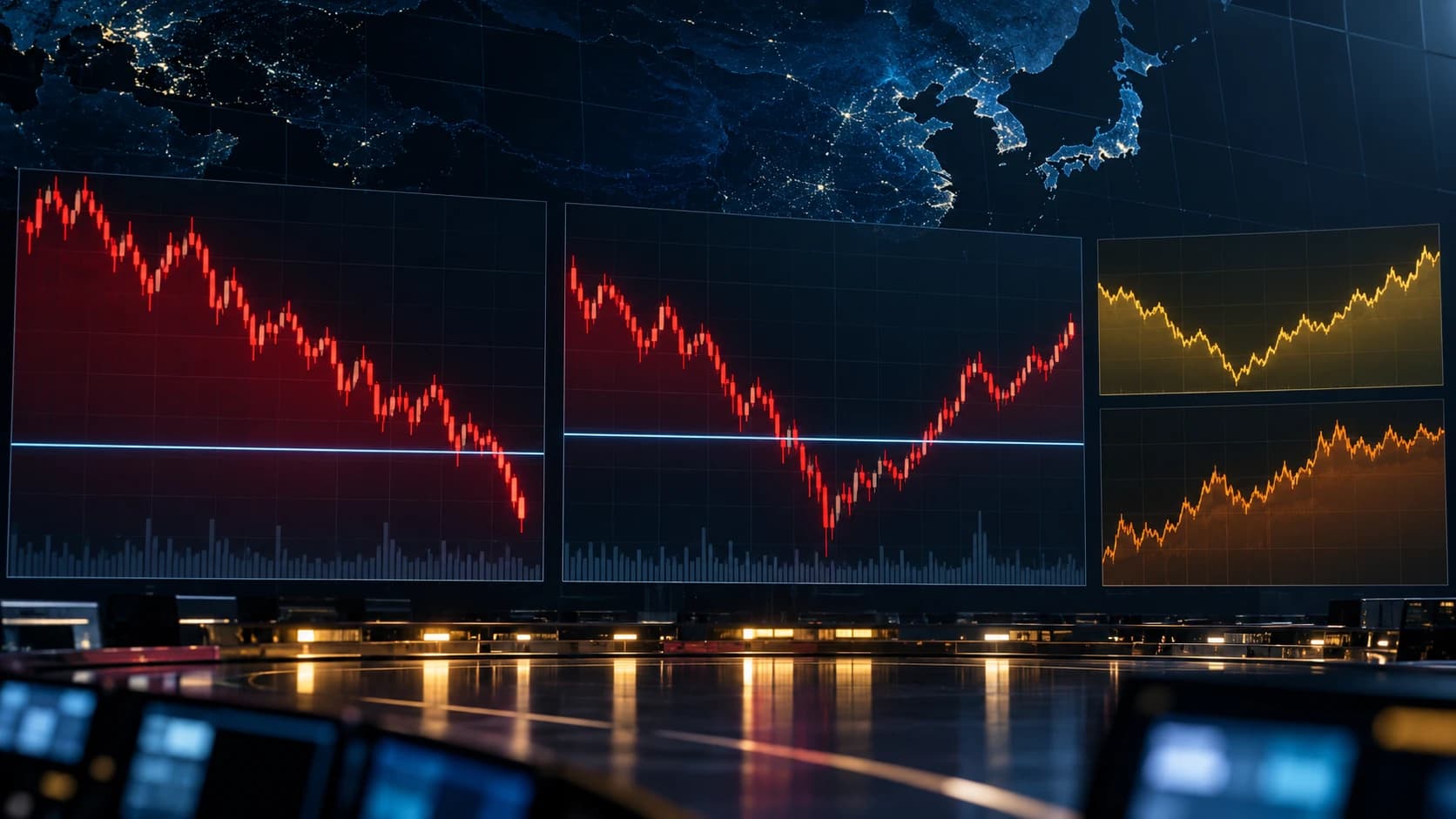
Nikkei confirmed a close below 63,000, while KOSPI recovered from an intraday support break and gold rebounded above $4,100.

Nikkei broke below 63,000 as the Asian technology sell-off extended, while Nasdaq futures approached 29,500, Brent cleared $111 and gold lost $4,100.

KOSPI erased Wednesday’s rebound as SK Hynix and Samsung led a deeper chip sell-off, while Nikkei tested support and Brent approached $111.

The Bank of Korea held rates but raised its growth and inflation outlook as KOSPI and Nikkei extended losses, Hang Seng lost 23,000 and Brent stayed firm.

Hang Seng reached a three-month low near 23,000 as KOSPI, Nasdaq futures and Bitcoin broke support, while Brent confirmed strength above $110.46.

Asian equities weakened as mixed US technology earnings pressured Nasdaq futures, while Brent and WTI rose more than 1% and gold and Bitcoin slipped.

IBM reversed almost 11% from its after-hours high despite an earnings beat, while Meta held a smaller gain and Tesla extended its post-report decline.

Tesla adjusted EPS beat expectations, but GAAP profit fell sharply and shares reversed from an after-hours gain to roughly 2.4% below the regular close.

Nasdaq closed 1.05% higher as technology and chip shares led a final-hour recovery, while Brent held above settlement and WTI lagged.

Brent reclaimed settlement and WTI recovered above its pre-EIA reference while US large-cap indices and technology shares retreated from afternoon highs.

WTI fell below its pre-EIA reference while Brent held its matching level, as Nasdaq leadership and broader US equity participation continued.

WTI and Brent lost their post-EIA confirmation levels while Nasdaq, semiconductors and broader US equity participation strengthened into midday.

Brent moved above settlement and WTI erased most of its loss after the EIA reported crude and gasoline draws, while Nasdaq and chip leadership strengthened.

The US cash open confirmed technology leadership as Nasdaq and semiconductor shares rose, while positive but slower breadth and weaker oil qualified the advance.

Europe and US futures advanced before the New York open, while oil reversed its early rally and major technology earnings became the next confirmation test.

Korea held a 3.3% closing rebound led by Samsung and SK hynix, while Japan, Greater China and Nasdaq futures showed weaker regional confirmation.

The KOSPI rose about 3.7% and the Nikkei gained about 1.8% as Samsung, SK hynix and other Asian technology shares extended the AI earnings rebound.

SpaceX rose about 8.3% after hours after Q3 revenue jumped 161% and operating profit turned positive, helping Nasdaq-100 futures lead overnight.

Brent fell to about $106.62 and WTI to $95.97 as gains broadened across US stocks, led by small caps, the Dow and equal-weight shares.

Brent and WTI erased their morning gains as the Dow, small caps and equal-weight stocks rose while Nasdaq and semiconductors fell after the US open.

Oil held above its previous settlement as Asian technology shares and European equities fell and Nasdaq-100 futures lagged before the US open.

Brent cleared $111 and WTI retook $100 as European equities stayed lower and Nasdaq-100 futures remained negative.

DAX and Euro Stoxx 50 fell about 1% as Brent moved above $110.70 and Nasdaq-100 futures weakened, extending Asian technology risk into Europe.

KOSPI deepened its loss to 4.1% and tested within five points of 5,488 as foreign selling hit chipmakers and Nasdaq-100 futures reversed lower.

KOSPI extended a 0.6% opening loss to nearly 3% as SK hynix and SoftBank weakened, challenging the durability of Monday’s narrow US technology rebound.

A practical process for reading company results beyond headline EPS, including revenue quality, margins, cash conversion, guidance and expectations.

Learn how theta estimates the cost of time, why decay accelerates near expiry and how direction, volatility and gamma interact with an option premium.

Learn how to calculate a theoretical ex-rights price, measure ownership dilution and compare subscribing, selling or allowing rights to lapse.

The Nasdaq and semiconductor shares rebounded after the US open, but a negative Dow and rising Treasury yield left the wider signal incomplete.

Europe sold off while US technology futures rebounded, Canada inflation reached 3.1%, oil retreated and Bitcoin held above $82,000.

Learn why a very high dividend yield can signal distress, how to test cash-flow coverage and why total return matters more than income alone.

Learn how foreign-exchange moves alter overseas investment returns, what hedged funds actually do and how to choose a deliberate currency policy.

France-led political and fiscal worries pushed European shares and the euro lower. See the FTSE, DAX, oil, gold and Bitcoin scenarios.

Learn how trading halts, volatility pauses and circuit breakers work—and why stop orders cannot guarantee an exit price after a gap.

Learn why ETF market price can differ from NAV, how to calculate premiums and discounts and how tracking difference affects returns.

Learn how delta estimates directional exposure, how gamma changes that exposure and why at-the-money options become more sensitive near expiry.

The yuan reached a four-year high and mainland shares recovered early losses after China’s GDP beat. See the latest stocks, gold, oil and Bitcoin signals.

Asian equities stayed lower after China’s GDP beat as AI funding concerns dominated. Here are the confirmation signals in stocks, oil and Bitcoin.

Learn how bids, asks and market depth affect execution, why displayed liquidity can change and how larger orders create slippage.

China’s Q3 growth beat forecasts, but property investment remains weak. Here is the cross-asset outlook for stocks, oil, gold and Bitcoin.

Learn how VWAP is calculated, how traders use it to evaluate intraday execution and why every price cross is not a signal.

Learn how calendar, threshold and hybrid rebalancing rules can keep portfolio risk aligned while accounting for costs and taxes.

Learn how beta estimates sensitivity to a benchmark, how portfolio beta is calculated and why it does not capture every source of risk.
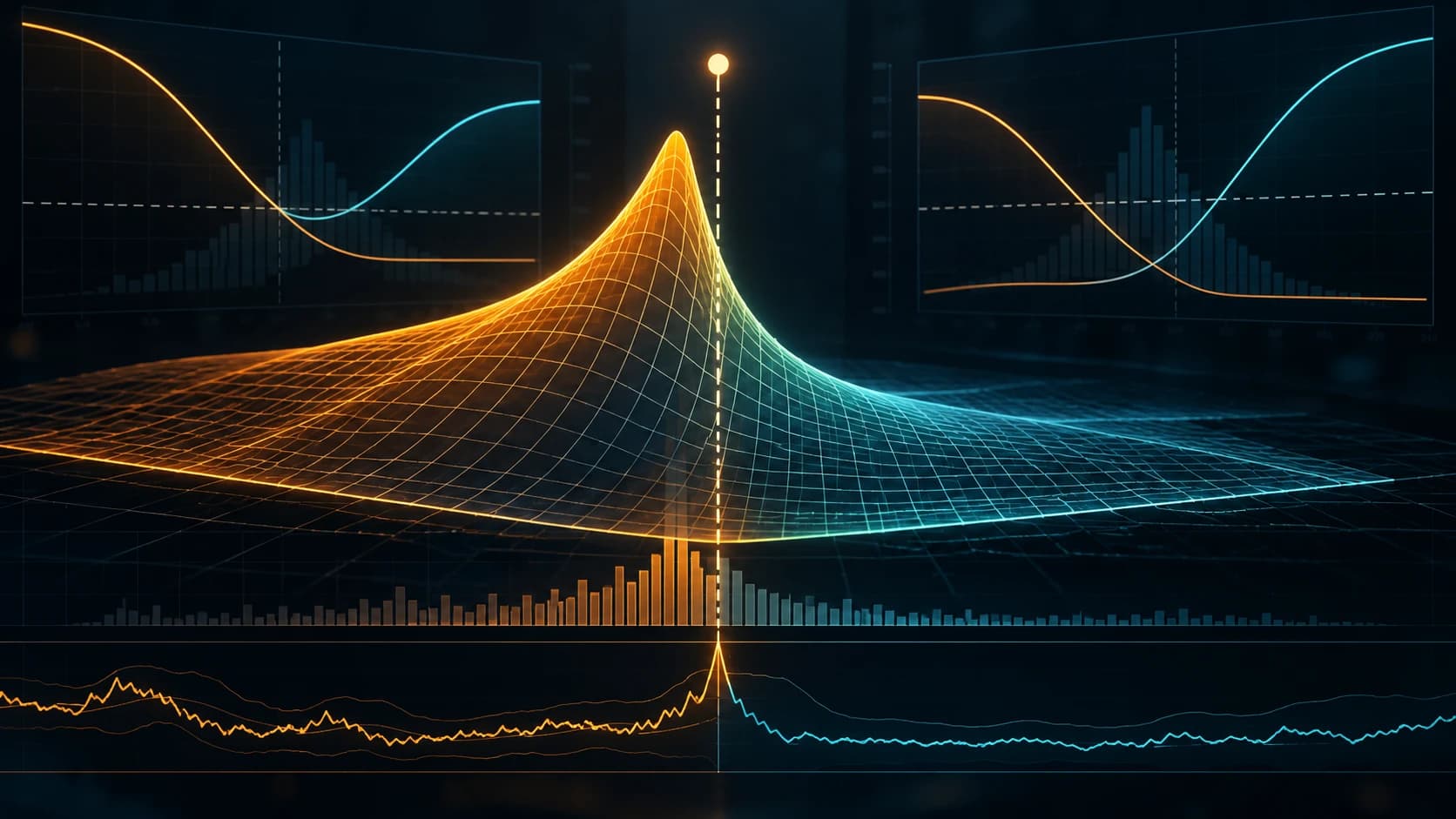
Understand implied volatility, event premium and IV crush—and why a correct directional call can still produce an options loss.
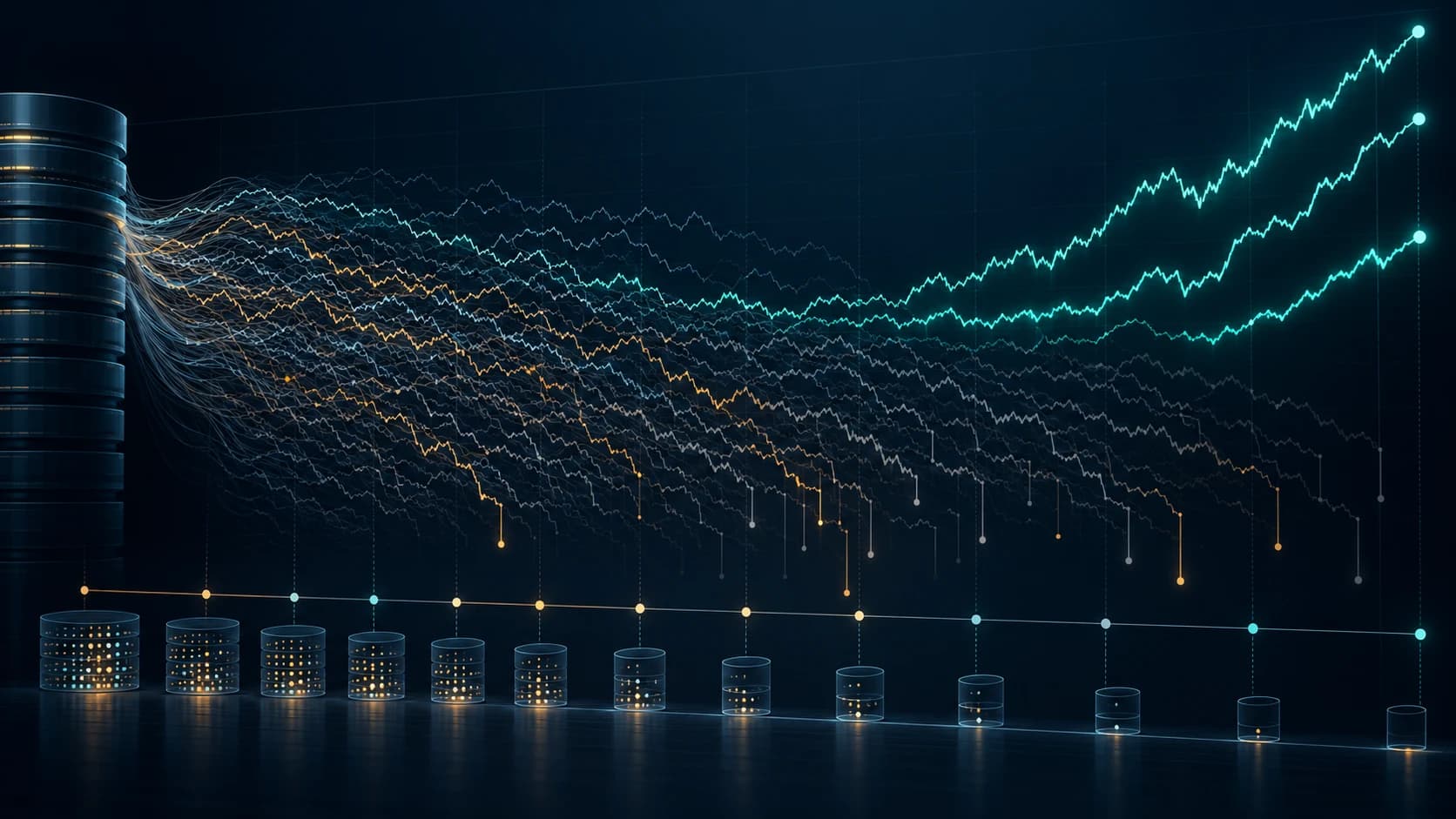
Learn why testing only today’s surviving companies inflates historical results and how to build a point-in-time investment universe.

Learn how dividends and stock splits alter historical charts, when to use adjusted data and how inconsistent series can corrupt a backtest.

Technology weakness, Brent near $110, firm gold and range-bound Bitcoin set up a divided start to the new trading week.

US technology shares fell sharply as Brent tested $110, gold held firm and Bitcoin traded its weekend range. Daily scenarios and next week’s catalysts.

US technology shares ended Friday sharply lower while Bitcoin trades through the weekend. Key daily levels, cross-market evidence and scenarios for the next sessions.

China reports strong September trade growth. We examine the implications for stocks and commodities, the daily confirmation needed, and the limits of the headline figures.

Asian equities and South Korean chipmakers rebound in early trading. We examine the daily confirmation needed before treating the move as a sustained recovery.

ASML reports on 14 October. We review its previously issued Q3 guidance and the evidence traders and investors should assess when the results arrive.

The S&P 500, Dow, Nasdaq and Russell 2000 finish lower. Our daily-timeframe analysis separates confirmed closing prices from conditions needed for a stronger trend.

London closes slightly lower after an early rally. A separate Coinbase Bitcoin snapshot and conditional daily scenarios explain what the evidence does and does not show.

The IMF projects 3.1% global growth in 2026. We examine conditional implications for stocks, gold, oil and Bitcoin without assuming a market reaction.

Goldman Sachs reports $5.29bn quarterly profit. What the results establish, what they do not, and the daily-timeframe tests for financial shares.

The 13 October daily roundup: FTSE strength, JPMorgan earnings, dated gold and oil prices, Bitcoin context and scenarios ahead of US inflation.

13 October market snapshot: chip-stock weakness, broader European resilience, gold and Brent context, and daily scenarios ahead of earnings and CPI.

13 October market briefing: timestamped gold, oil and Bitcoin readings, the US CPI calendar, and conditional scenarios for traders and investors.